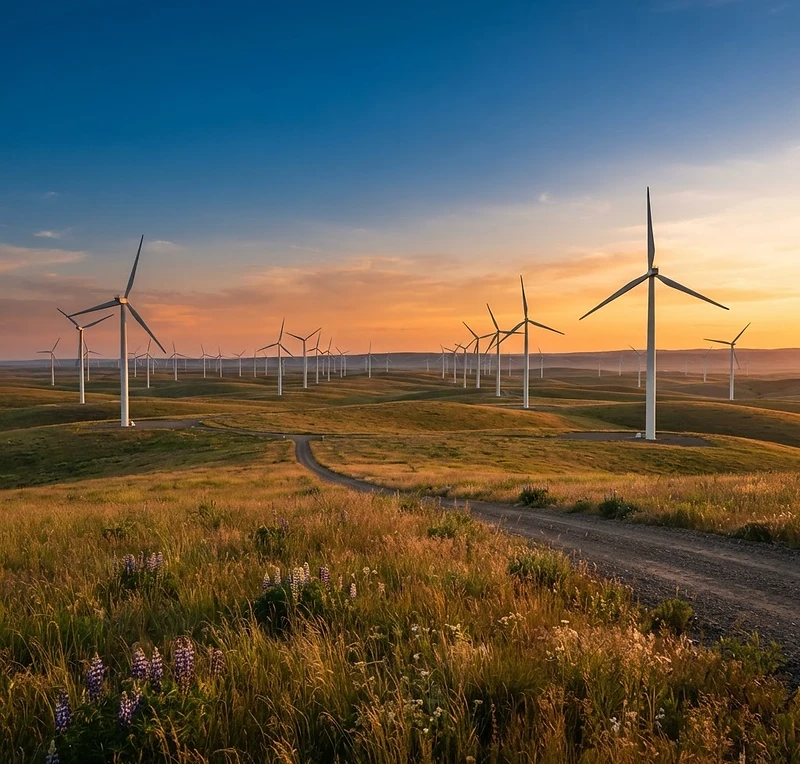
EDS Energy & SoyutWind
Connecting Wind-Energy Opportunities with Manufacturing Expertise in Türkiye.
MMVM International is the partnership's development partner, working with EDS Energy to bring wind-energy and water-pumping products — manufactured and supplied by Soyut Energy under the SoyutWind brand — to market opportunities.
Discuss Your Project“One partnership, two brands — wind-energy opportunities matched with Turkish manufacturing precision, brought together through MMVM International.”
Two Brands, Complementary Roles

EDS Energy
EDS Energy connects U.S. customers with wind-energy products and related commercial support, helping translate project requirements into supplier discussions and product proposals.
- On-grid and off-grid wind turbines
- Wind-powered water pumps — Windmill 4.8 and Windmill 6
- U.S. distributor network and B2B support
- Tailored proposals for commercial and agricultural projects

Soyut Energy / SoyutWind
Soyut Energy, operating under the SoyutWind brand, provides wind-turbine manufacturing expertise and products for a range of energy applications.
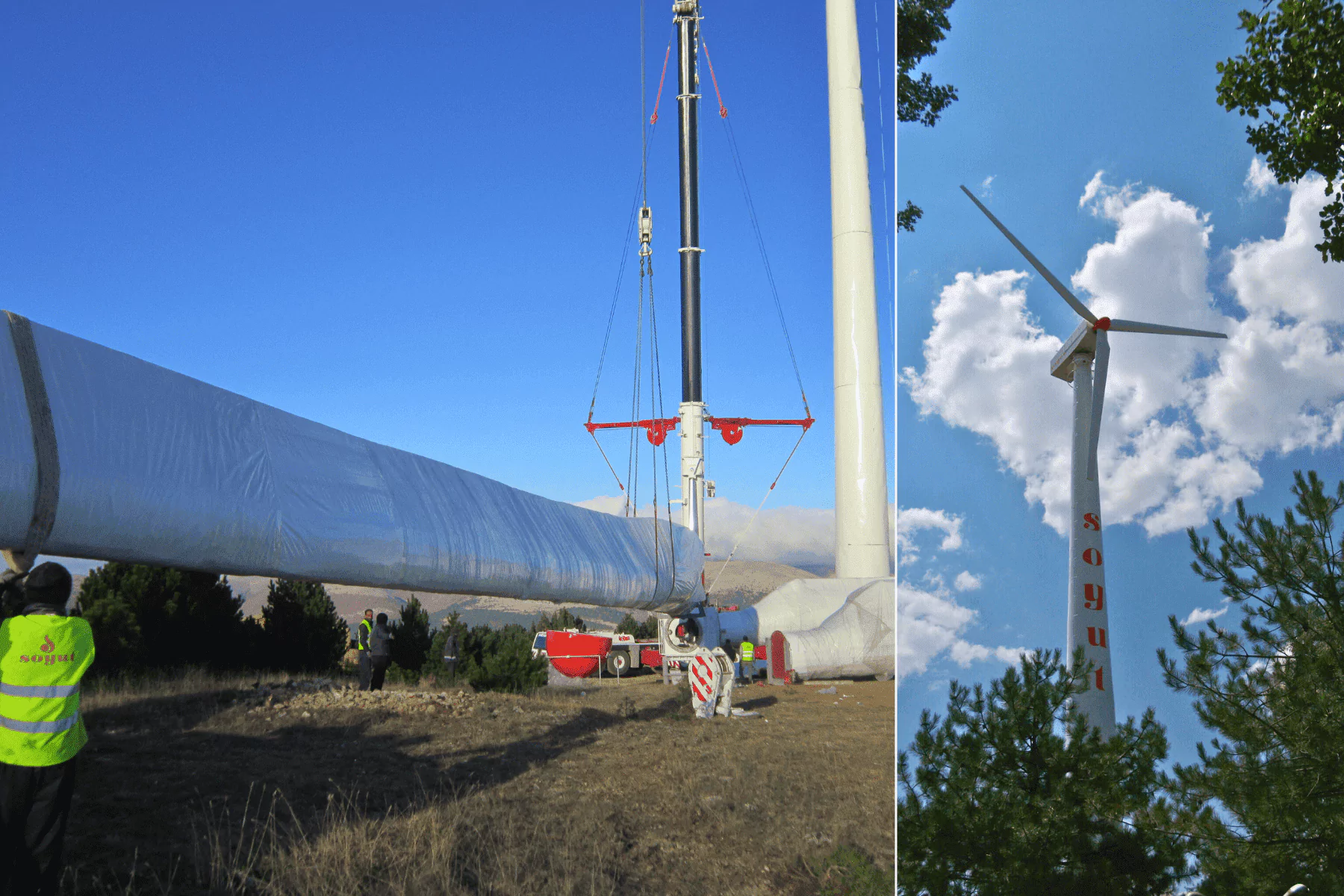
- Blades, towers, nacelles and control systems manufactured in-house
- Permanent-magnet generator (PMG) technology — no gearbox
- Internationally certified production
- Turkey's first wind turbine and windmill exports, delivered to Africa
Proven Manufacturing, Real Track Record
The capabilities behind this partnership are grounded in decades of energy-sector experience and Turkey's first domestically manufactured wind turbines.
Soyut Energy is a subsidiary of Çolak Holding, active in energy since 1974
250 kW turbine, in R&D since 2000 and installed in 2004
Blades, towers, nacelles and control systems produced in Ankara–Temelli
Permanent-magnet generator (PMG) technology, battery or grid-connected
Delivered to countries across Africa
Solutions
Wind-Energy Generation
Reliable on-grid and off-grid turbine solutions — engineered and manufactured in Türkiye, matched to site conditions and energy requirements.
Wind-Powered Water Pumping
Mechanical windmills that move water without fuel or grid access — built for irrigation, livestock, and remote water supply.
Related Systems & Components
Towers, controllers, inverters, accessories, and spare parts selected for the proposed installation and its operating requirements.
A coordinated equipment scope helps identify what is needed for installation, operation, maintenance, and future parts support — so the project is assessed as a complete system, not just a turbine purchase.

Potential Applications
Agriculture & Water Pumping
Wind-powered pumping can serve irrigation, livestock, and rural water needs where the grid doesn't reach.
- Reduce pumping-fuel costs — the wind takes over the work your fuel budget covers today.
- Reach water points beyond the grid — pump where the power lines don't go.
- Reduce dependence on fuel deliveries — one less delivery run to plan around.
- Build a water reserve — store water while the wind blows, draw on it when it doesn't.
- Put wind to productive use — turn a free resource into daily farm output.
Project considerations
Whether it makes sense depends mainly on wind availability at the site, compared with the cost and logistics of the current pumping method.
Water output varies with wind conditions; storage or a backup source may be needed for continuous demand.
Remote & Off-Grid Sites
Independent generation for homes, facilities, and operations far from grid infrastructure.
- Evaluate an alternative to grid extension — local power can cost far less than new lines.
- Reduce generator fuel use — wind shoulders part of the load, so the generator works less.
- Reduce reliance on fuel logistics — fewer deliveries, fewer refueling runs.
- Diversify your energy supply — pair wind with solar or storage for a steadier supply.
- Enable productive use of remote sites — power unlocks what the site was meant to do.
Project considerations
Best explored where grid connection is unavailable, slow, or costly, and site wind conditions support generation.
A continuous supply usually requires storage and often a second source, which adds to project scope and cost.
Commercial & Industrial Energy
On-site wind generation that can complement commercial energy strategies.
- Offset purchased electricity — power you make is power you don't buy.
- Reduce exposure to electricity-price changes — what you generate on site is shielded from rate swings.
- Put available site resources to work — idle land and steady wind can become a working asset.
- Advance renewable-energy objectives — a visible, measurable step in your energy mix.
- Diversify your energy strategy — a second source strengthens any supply plan.
Project considerations
Worth assessing where energy is a significant operating cost and the site has a workable wind resource.
Grid-connected turbines do not supply power during an outage unless the system is designed for it; interconnection agreements and local rules apply.
Distributed Wind Opportunities
Generation placed close to demand, wherever the resource allows.
- Generate close to demand — power produced where it's actually used.
- Match investment to a defined need — size the system to the need, not the other way around.
- Explore projects beyond utility-scale wind farms — meaningful projects don't have to be massive.
- Build a phased portfolio — invest step by step, where each site's case is proven.
- Combine energy supply with existing land use — turbines and farmland can share the same ground.
Project considerations
Suitability depends on local wind conditions, land considerations, and interconnection requirements.
Permitting, zoning, and grid-connection rules vary by location and shape what is feasible.
What Makes a Project Worth Exploring?
Consistent wind at the location is the foundation; conditions should be assessed before any equipment decision.
The energy or water requirement the project must serve — quantity, timing, and reliability — determines which products fit.
Comparing with the current source of supply — grid electricity, fuel-based generation, or hauling water — frames the practical case.
Equipment, civil works, interconnection, storage, and installation together give a more realistic picture than turbine price alone.
Supply terms, lead times, servicing, and any location-specific incentives or export arrangements shape the final assessment.
These factors support a first-pass assessment only; project decisions require site-specific evaluation and applicable approvals.
Turning Opportunities Into Business
The right opportunity needs the right connections to become reality.
MMVM International connects market demand with the suppliers, strategic partners, and local expertise needed to move projects forward — identifying where the opportunities are and bringing the right parties to the table.
From the first conversation onward, we align customers and manufacturers, clarify project needs, and keep coordination moving.
We don't just open doors — we build the momentum that moves business forward.
Discuss Your ProjectCould These Solutions Fit Your Project?
Share your location, intended application, approximate energy or water requirement, and current source of supply. MMVM International can coordinate an initial discussion with the supplier team.
Discuss Your Project